
Beyond the Pitch: 5 Unexpected Ways a Modern Soccer Club is Redefining Youth Development
The modern parent is no longer searching for a mere weekend distraction or a "participation trophy" factory. They are looking for a shipyard for the soul—a place where the chaotic energy of childhood is forged into the drive, grit, and character of an elite athlete. At Weston Select and AYSO 644, we have moved past the passive nature of traditional youth sports. By utilizing a visionary "player-centered approach," we are building "Elite Soccer Athletes" through an architecture of technical, tactical, and psychosocial guidance.
This isn't just about winning games; it’s about a cultural shift. From high-stakes in-house competitions like "Goalkeeper Wars" and 1v1 tournaments to specialized "Culture Projects," we are constructing a platform for resilience. Here are five unexpected ways we are redefining the laboratory of youth development.
1. The "Golden Shirt" Philosophy: Character as a Competitive Edge
In our program, "just playing" is not a deep enough reason to take the pitch. To bridge the gap between a hobby and a pursuit of excellence, we utilize the "Golden Shirt Award." This initiative, rooted in the framework of the VIA Institute on Character, identifies one player per month who exemplifies specific character strengths.
Our curriculum rotates through six core virtues to ensure a holistic psychological evolution:
Wisdom (August and February)
Courage (September and March)
Humanity (October and April)
Justice (November and May)
Temperance (December)
Transcendence (January)
The Golden Shirt is more than a prize; it is a visible marker of a "competitive spirit." It serves to incentivize the choice to compete, raising the intensity of every training session.
"Our biggest wish is to change the psychological mindset from just playing to competing... we hope that our kids... can change that mindset to not only compete on the soccer field but with everyday life situations."
2. Duct Tape and Recyclables: Building Empathy Through "Make Your Own Ball Day"
True elite development requires a perspective that extends beyond the manicured turf of South Florida. One of our most provocative events is "Make Your Own Ball Day" (MYOBD). We ask families to gather recyclables and duct tape to construct their own soccer balls, which are then used in friendly, barefoot matches.
This isn't just a craft project; it is an exercise in global empathy. By stripping away the high-end equipment, we teach our players to value their resources and recognize that soccer is a universal language, often spoken most fluently in environments of scarcity.
"This project will allow us to discuss important matters such as respect for other people regardless of income or resources, showing empathy and understanding that soccer is a universal sport that can absolutely be played by anyone and everyone."
3. The Juggling Revolution: Gamifying Technical Mastery and Integrity
Under the guidance of specialists like Coach Gabe, we have sparked a "revolution" in individual ball mastery through The Jugglers Club. We utilize a system of seven iron-on badges—ranging from 15 to 1,000 juggles—that players wear as a "personalized touch" on their training shirts.
However, the architecture of this program relies on more than just physical skill; it relies on the "Honesty is Key" policy. To earn a badge, a player must perform in front of a witness or a coach. We maintain a living archive of excellence—the Official Record Book—where every touch is etched into the program’s history. This system creates self-responsible athletes who understand that technical ability and confidence are earned through witnessed performance and personal integrity.
4. The 14-Kilometer Athlete: Preparing for the Modern Game’s Physical Evolution
The game of soccer has undergone a radical transformation. Data from our specialized conditioning programs reveals a staggering shift in the physical demands placed on modern players.
Over the past 20 years, the demands of soccer have increased dramatically. Players who once covered approximately 6–8 km per match are now expected to run closer to 14 km, reflecting a faster and more physically demanding game. Reaction times have also improved significantly, dropping from around 1.5 seconds to just 0.5 seconds, requiring quicker decision-making and sharper technical execution. In addition, match frequency has increased substantially, with players now competing in up to three times as many games as before. Together, these changes highlight how the modern game places greater emphasis on speed, endurance, and efficiency than ever before.
Because players today play three times as many matches as their predecessors 30 years ago, our "Zero Program," led by specialist Marcos Cerutti, is no longer an optional "extra." It is an essential component for injury prevention and "soccer shape." We don't just focus on the running; we educate our athletes on the elite pillars of recovery and nutrition, ensuring they are physically prepared to withstand the intensity of the highest levels of the game.
5. "EPIC" Inclusivity: When "Everyone Plays" is the Mission
We believe that elite aspirations should never come at the cost of community accessibility. This is why we rebranded our VIP program to EPIC: Everyone Plays In Our Community. This program provides a quality soccer experience for athletes with intellectual and physical challenges, ensuring they enjoy the full "holistic experience"—from team uniforms to scoring goals.
The "EPIC Buddies" system allows high school volunteers to assist players on the field, fostering a culture of patience and kindness. Perhaps most importantly, the EPIC program is 100% sponsorship-funded and free for all participants. This commitment ensures that the "beautiful game" remains an open door, proving that our definition of "Elite" includes the depth of our community impact.
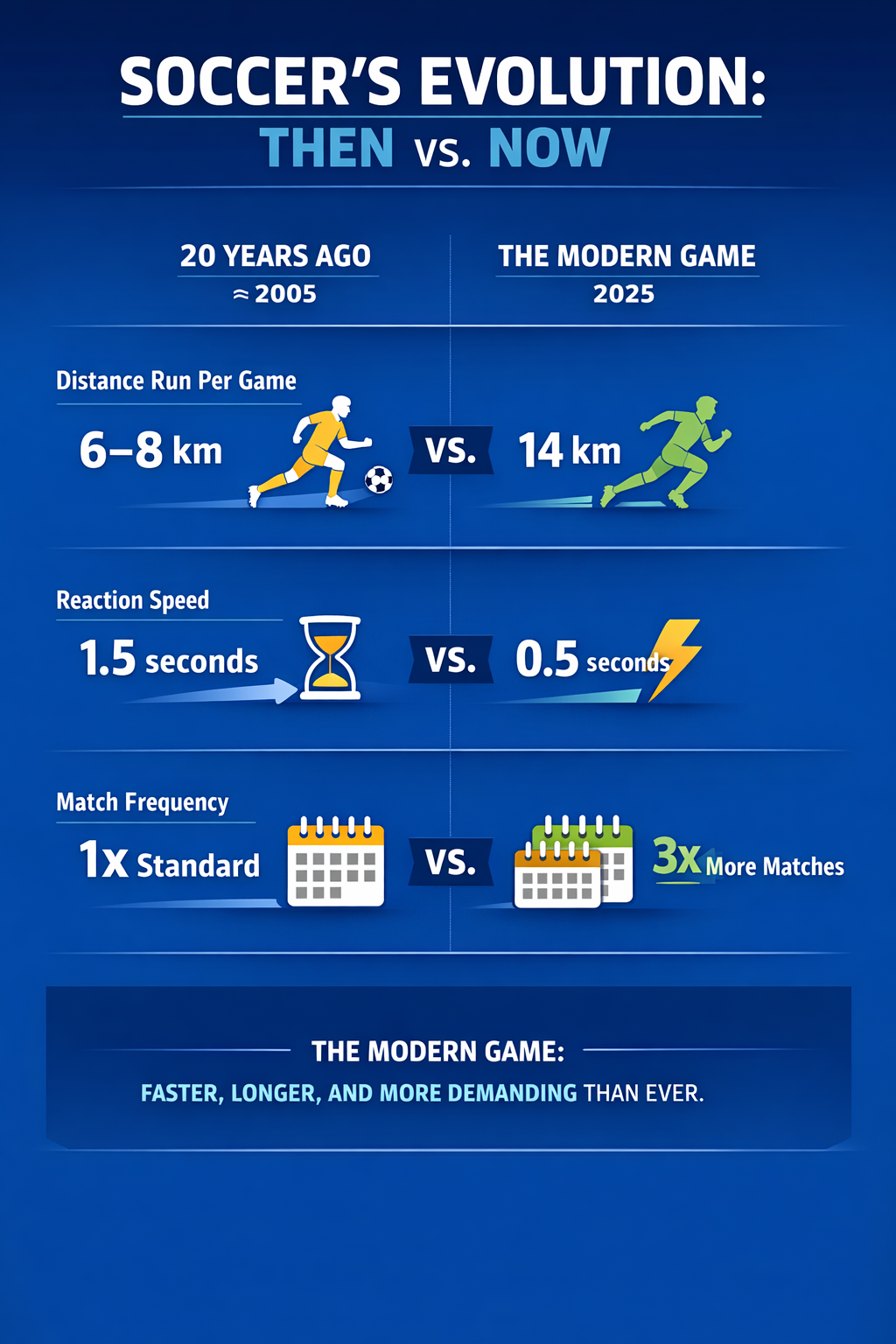
Physical Demands on the Modern Player
Conclusion: The Future of the Elite Athlete
The development pathway we have designed is a long-term journey. From the "Mini Kickers" (U5) to "The Graduate League" (U12) and finally the "Stepping Stone" (U13-U18), our curriculum is overseen by Technical Director Tom Mulroy and Director of Coaching Jan Wiechmann.
We utilize a pedagogical strategy of "chunking" information—breaking down complex technical and tactical concepts so they can be digested over years of deep learning. This structured approach ensures that when a player graduates, they aren't just tactically sound; they are "kind, fair, fierce, competitive and loving people."
If we define "elite" not just by skill, but by character and community impact, what kind of world—and what kind of game—are we building for the next generation?
